
Dirga Raj Lama
Web Developer
Top Free vs Premium WordPress Themes: Which Should You Choose?
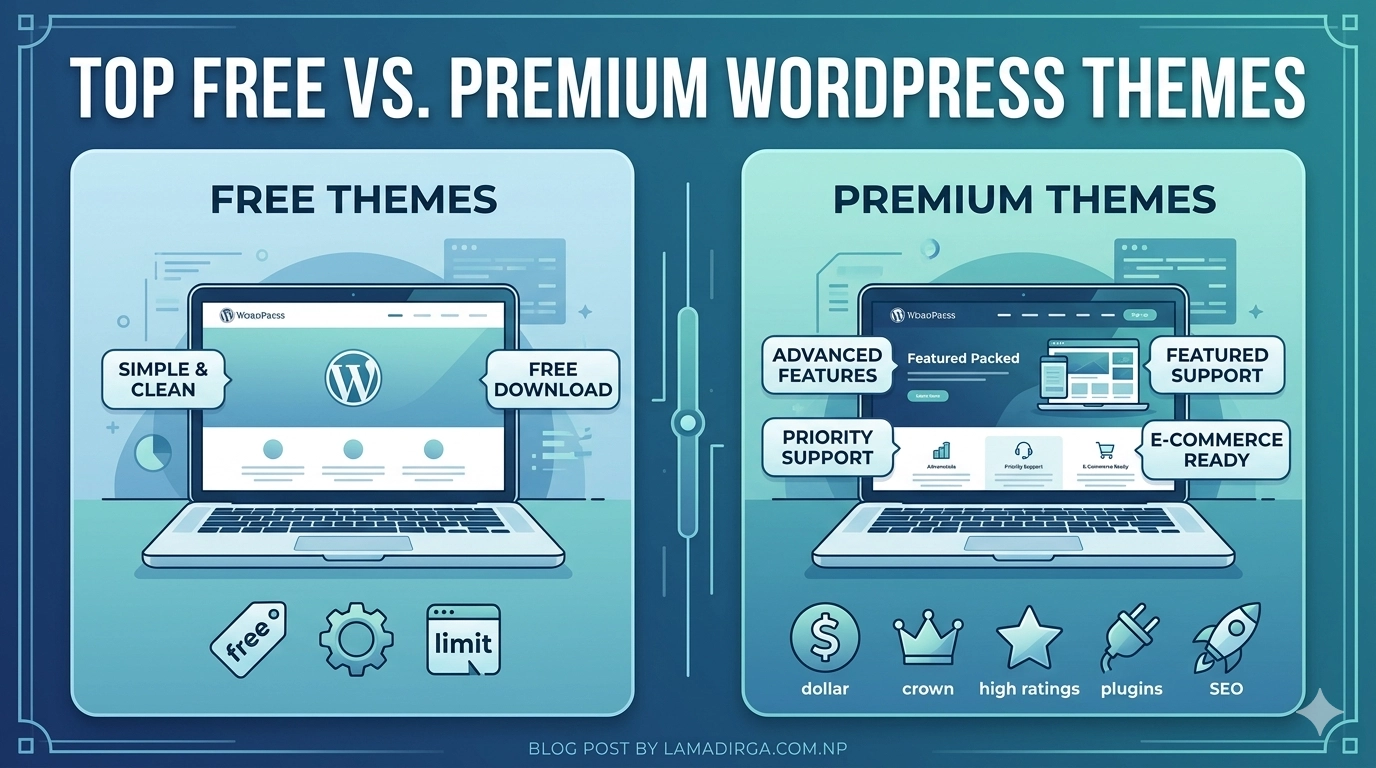
Choosing the right foundation for your website is one of the most critical decisions you will make in your digital journey. As we move through 2026, the gap between the top free vs premium WordPress themes has narrowed significantly, thanks to the rise of Full Site Editing (FSE) and high-performance block-based builders. While free themes have become more sophisticated and lightweight, premium themes continue to offer unparalleled support and “all-in-one” functionality. In this guide, we will break down the pros, cons, and performance metrics of both options to help you decide which investment—or lack thereof—is right for your specific goals.
The Evolution of Free WordPress Themes in 2026
In the past, free themes were often viewed as “starter” options—limited in features and sometimes poorly coded. Today, the landscape is entirely different. The best free themes available in the official WordPress directory undergo a rigorous review process, ensuring they meet high security and coding standards.
- Speed and Performance: Modern free themes like Astra, GeneratePress, and Hello Elementor are famous for their “bare-bones” approach. Because they don’t bundle hundreds of experimental features, they often achieve near-perfect scores on Core Web Vitals.
- Full Site Editing (FSE): With the release of themes like Twenty Twenty-Five, users now have the power to edit headers, footers, and global styles for free, a luxury that was once exclusive to paid “Pro” versions.
- Low Risk: There is no financial commitment. You can swap between twenty different free themes in an afternoon until you find the aesthetic that fits your brand.
When to Make the Jump: The Power of Premium Themes
While free themes provide the skeleton, premium themes provide the muscle and the brain. If you are running a serious business, a high-traffic blog, or a complex e-commerce store, the “Pro” version of a theme often pays for itself in saved time and reduced plugin dependency.
1. Dedicated Customer Support
The most significant advantage of premium themes is access to expert support. When a WordPress update breaks your layout or a plugin conflicts with your header, free theme users are often left searching through community forums. Premium users can typically open a ticket and get a resolution within hours.
2. Advanced Customization & “Starter Sites”
Premium themes like Divi, Avada, and the Pro versions of Kadence or Blocksy come with massive libraries of “Starter Sites.” These are professionally designed, pre-built websites that you can import with a single click. Instead of building a logo design service page from scratch, you can import a template and simply swap the text and images.
3. Reduced “Plugin Bloat”
Often, to get a specific feature in a free theme (like a sticky header, an advanced mega menu, or custom WooCommerce layouts), you have to install three or four extra plugins. Premium themes bundle these features into the core code, which is often more efficient and reduces the risk of security vulnerabilities.
Performance Comparison: Data at a Glance
When analyzing the top free vs premium WordPress themes, speed is the ultimate tie-breaker. Here is how some of the 2026 leaders compare in a standard environment:
| Theme Name | Type | Load Time (Avg) | Best For |
| Astra (Free) | Lightweight | 1.1s | Blogs & Small Business |
| GeneratePress Pro | Performance | 0.9s | Developers & SEO Purists |
| Divi (Premium) | Multipurpose | 2.4s | Creative Agencies |
| Blocksy (Free) | Modern/FSE | 1.3s | Portfolio & News |
| Avada (Premium) | All-in-One | 2.1s | Large Corporate Sites |
Security and Updates: The Hidden Factor
Security is a major point of divergence in the top free vs premium WordPress themes debate. Free themes are updated at the developer’s whim. If a developer loses interest in a free project, your site could be left vulnerable to exploits.
Premium themes are the bread and butter of established companies. They have a financial incentive to release frequent updates, patch security holes immediately, and ensure compatibility with the latest version of WordPress.
Final Verdict: Which is Right for You?
Choose a Free Theme if:
- You are a hobbyist or a new blogger on a tight budget.
- You are comfortable using page builders like Elementor or Gutenberg to design your own layouts.
- You prioritize raw speed over built-in flashy features.
Choose a Premium Theme if:
- You are building a site for a client or a professional business.
- You need “niche” functionality (like a directory, a learning management system, or a high-end shop) without hiring a developer.
- You want the safety net of 24/7 technical support.
Conclusion
Whether you opt for the simplicity of the top free vs premium WordPress themes, the goal remains the same: providing a fast, secure, and engaging experience for your visitors. Many successful site owners start with a free version of a versatile theme like Kadence or Astra and only upgrade to the Pro version once their traffic and revenue justify the cost.
For more tips on optimizing your WordPress site, check out our guide on fixing duplicate content or explore the latest digital marketing trends to grow your audience in 2026.